


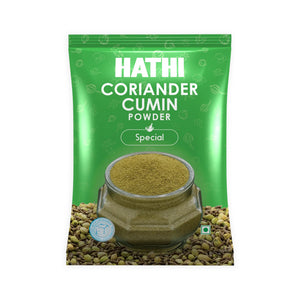
Coriander Cumin Powder (Dhana Jeera Powder)
Pure Dhaniya Powder | Fresh Ground | Aromatic & Flavorful | Cryogenic Grinding
 sold in last hours
Guarantee Safe Checkout

Bulk Inquiry


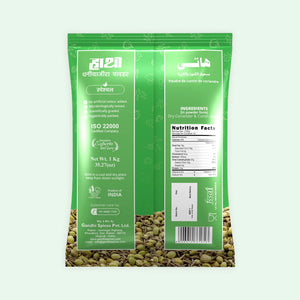
Manufactured & Marketed By: Gandhi Spices Pvt.Ltd.
Rajkot-Jamnagar Highway, Khandheri, Rajkot, Gujarat - 360006
Country of origin India
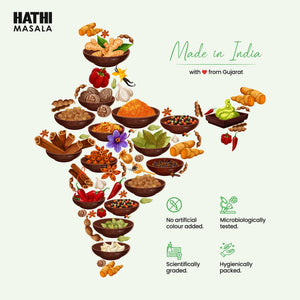
 No artificial colour added.
 Microbiologically tested.
 Scientifically graded.
 Hygienically packed.
Coriander Cumin Powder (Dhana Jeera Powder)
-
Description
Coriander Cumin Powder (Dhana Jeera Powder)
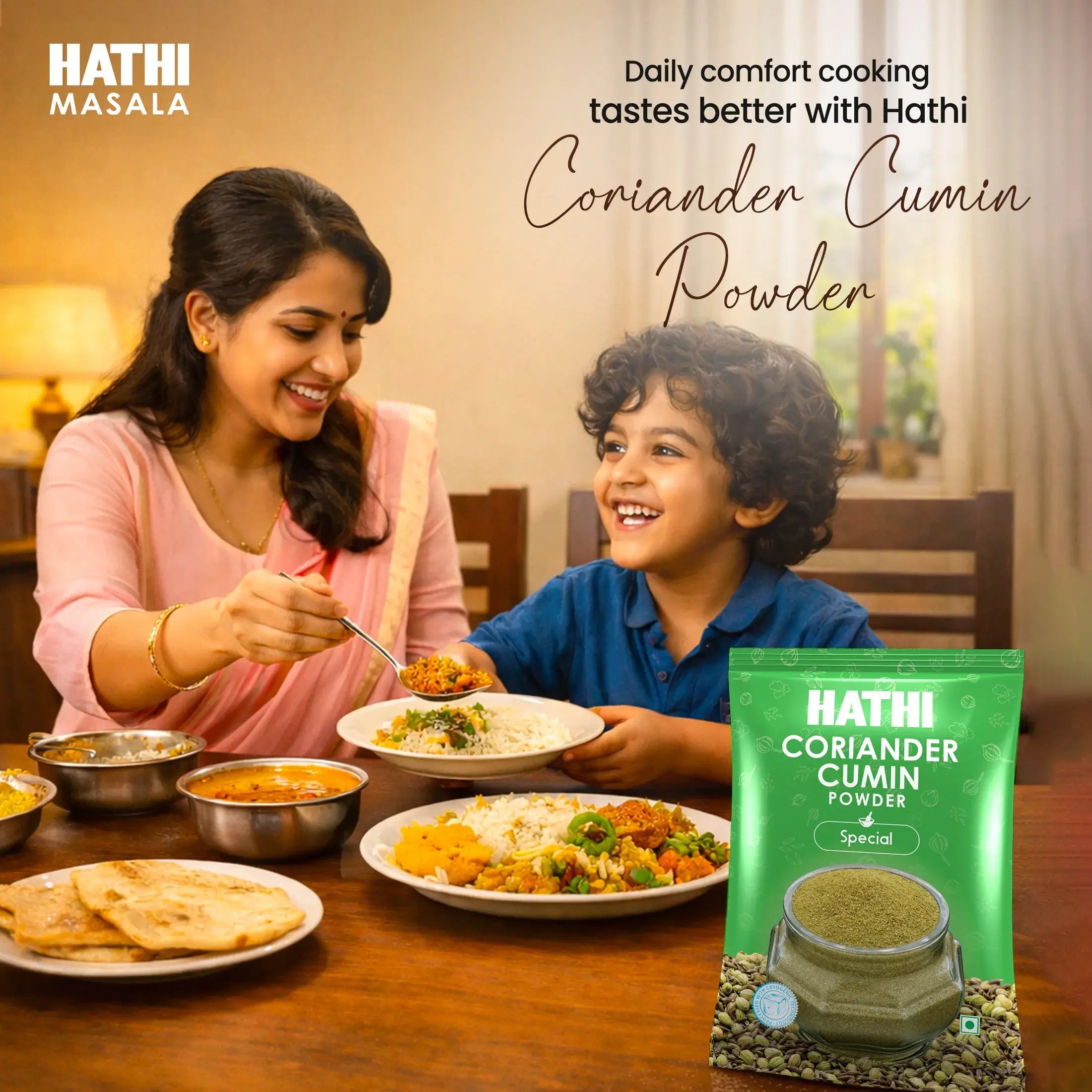
Hathi Masala Coriander Cumin Powder is a combination of coriander seeds sourced from regions of Rajasthan and cumin seeds sourced from regions of Gujarat. Machine-cleaned, roasted, and ground separately, then blended in the right 2:1 Coriander Cumin ratio. This is why the aroma is noticeably stronger than that of traditional dhana jeera powders, in which both seeds are simply mixed and ground together in one pass. No artificial additives or preservatives. It’s the everyday spice base for dal, sabji, curry, and raita in every Indian kitchen. Available in 100g, 200g, 500g, 1kg, and 5kg.
Why Trust Hathi Masala Special Coriander Cumin Powder?
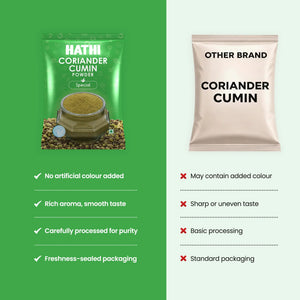
- Separately grinded
- Lab Tested for 20+ Parameters
- From the trusted farms of Rajasthan and Gujarat
- Hygienically packed
- No Artificial Additives or dyes
- FSSAI and ISO 22000 certified
What Is Special Coriander Cumin Powder?
Coriander-Cumin Powder is also known as Dhana Jeeru Powder in Gujarati and Dhana Jeera Powder in Hindi. It is a dry spice mixture of ground coriander (dhana) and cumin (jeera) seeds. It is the single most used spice blend in Traditional Indian home cooking. The volatile citrus oil linalool is the active compound in coriander. Cuminaldehyde is the active compound in cumin that gives your dishes a warm, woody aroma. These two spices create the earthy-citrus flavor for every Indian dal, sabzi, and curry.
Sourcing and Origin
Hathi Masala sourced good-quality coriander seeds from the trusted farmers across Rajasthan and cumin seeds from the farmers in Gujarat. Both of them are among India's most respected producing regions for these spices. The dry climate and light sandy soil of Rajasthan produce coriander seeds with strong essential oils and clean citrus notes. Gujarat is one of the largest cumin-growing states in India. It’s known for producing cumin with a warm fragrance and high levels of the aromatic compound. That gives it its fragrance and taste.
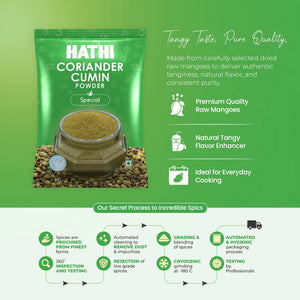
Both seeds are machine-cleaned to remove dust, stones, and impurities before grinding. Seeds that don’t meet the required standards are rejected before processing.
Why Separate Grinding Makes the Difference
Most dhana jeera powders are made by mixing both coriander and cumin seeds together and grinding them traditionally in a single pass.
Coriander seeds contain natural citrus essential oils that are damaged at the high speed needed to break down cumin's harder seed coat. Cumin contains earthy essential oils that need separate mill settings to extract properly. When you grind both together, one gets over-processed and the other under-processed. You lose the full aroma of at least one of them every time.
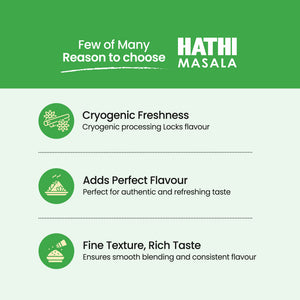
Hathi Masala grinds coriander and cumin seeds separately at their respective controlled temperatures using cold cryogenic grinding. Each spice keeps its natural oils completely. Once both are ground to the right consistency, they are blended at the correct 2:1 ratio. Every teaspoon you add to your cooking gives you the full, layered aroma of both spices.
How to Use Special Coriander Cumin Powder
Dal Tadka: Add 1 teaspoon of special dhana jeera powder to the hot oil or ghee before adding the tomatoes and onions. The essential oils in dhana jeera provide the beautiful earthy-citrus base that makes your dal taste complete.
Sabji: Mix 0.5-1 teaspoon with the onion-tomato masala while it cooks. Special Coriander Cumin Powder works perfectly in every vegetable sabji, from Batata Nu Shaak to Mix-Sabji and Aloo Gobi.
Gujarati Dal: Add 0.5 teaspoon into the dal while it simmers. Dhana Jeera Powder is an important flavour in Gujarati dal and can’t be changed with separate Dhana (coriander) or Jeera (cumin) powder.
Raita: Sprinkle a quarter to half teaspoon of the spice onto the fresh yogurt, then add a pinch of salt. It adds instant flavour depth without any cooking.
Buttermilk and Kadhi: Blend a pinch of the Dhana Jeera Powder into the buttermilk or yogurt base. It is the flavour note that makes homemade chaas and kadhi taste the way they should.
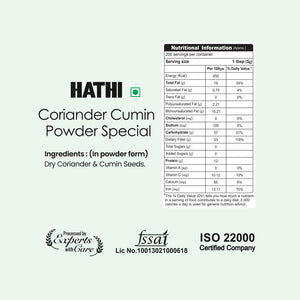
Nutritional Information
Nutrient
Per 100g
% Daily Value
Energy (Kcal)
450
-
Total Fat (g)
19
24%
Saturated Fat (g)
0.75
4%
Trans Fat (g)
0
0%
Polyunsaturated Fat (g)
2.21
-
Monounsaturated Fat (g)
15.21
-
Cholesterol (mg)
0
0%
Sodium (mg)
100
5%
Carbohydrate (g)
57
21%
Dietary Fiber (g)
33
118%
Total Sugars (g)
0
-
Added Sugars (g)
0
-
Protein (g)
12
-
Vitamin A (µg)
0
0%
Vitamin C (mg)
10.12
10%
Calcium (mg)
85
6%
Iron (mg)
13.17
70%
Nutritional values are indicative. Exact values may vary by batch.
Quality You Can Trust
Hathi Masala has been part of Indian spice manufacturing since 1952, made by Gandhi Spices Pvt. Ltd. in Rajkot, Gujarat. Special Coriander and cumin seeds are machine-cleaned and ground separately at controlled temperatures, then blended together. Every batch undergoes a 9-step purification process and is lab-tested for purity, fragrance quality, and safety. It processes without any human contact at any stage.
- FSSAI Certified and ISO 22000 Manufacturing
- Lab Tested Every Batch
- Cryogenic Ground at -150°C, No Heat Damage
- Hygienically Packed, Dedicated Sterilization Facility
- Flavour-Locked 3-Layer Packaging
Buy Hathi Special Coriander Cumin Powder online. Available in 500g, 1kg, 5kg, and 20kg packs to suit your kitchen or bulk needs.
More from the Hathi Masala Kitchen
Explore related collections:
Everyday Masala, Turmeric, coriander, cumin & more for daily cooking
Turmeric Powder, Selam, Rajapuri, and Super Turmeric
Pickle Masala, Ready-to-use mixes for homemade achar
Whole Masala, Whole spices for tadka and traditional cooking
-
Recipes
-
History & Source
-
Ingredients
-
FAQ